In short
- Ontario does not licence movers, so insurance is checked by you: ask for the insurer, the policy number and the limit on compensation.
- Ontario's consumer page says to ask whether the mover's cover includes items you packed yourself.
- A 2017 insurance-industry release says many home policies cover belongings in transit, some do not, and a separate move policy usually costs more than amending your home policy.
- One Ottawa long-distance firm publishes $5M liability and $50K cargo cover; limits differ by company.
Three layers of cover
When something breaks on a long-distance run from Ottawa, up to three parties can answer for it. The mover is liable under its contract, up to a limit. Your home or tenant insurer may cover belongings in transit. A separate transit policy can fill the gap for valuables. Each has conditions.
The answers sit in paperwork you read before the truck is loaded. This page lists the questions. Route and price notes are on long-distance moving and long-distance moving cost.
What the mover’s cover is
Valuation is the mover’s liability limit, the most it pays for damage or loss. The figure and the method belong in the contract. This page prints no per-pound or per-item number, because we found no published Canadian rule to quote; the company that calls you gives its own.
Ontario’s tip sheet lists questions for any mover: who is responsible for loss or damage, what limits apply to compensation, who the insurer is and the policy number, whether work is subcontracted, and whether belongings left overnight in a truck stay in a secure facility.
What a firm can publish
One Ottawa long-distance firm says it runs its own trucks with $5M liability coverage and $50K cargo insurance. Another says it is accountable for contents its own crew packs, while liability on customer-packed boxes is typically limited to the outer carton. These are company claims. Compare the wording in each written quote. Packing questions are covered on packing services.
Your own insurance
A 2017 release from an insurance services firm reports that 80% of Canadians polled were not properly insuring belongings in transit. It says most home insurers allow you to transfer a policy to the new address, which covers belongings in transit, and gives a dropped television as the example. It adds that some providers do not cover the move, and that a separate policy usually costs more than amending your home policy.
Phone your insurer or broker with the date, route and new address, and ask:
- Does the policy cover belongings on a mover’s truck, and for how many days?
- Is a storage stop covered?
- What is the deductible, and are items you packed covered?
High-value and awkward items
Art, instruments, jewellery and collectibles can exceed a basic limit. The Canadian Consumer Handbook says to take valuables with you and keep them off the truck. If something has to travel on the truck, photograph it and note the serial number.
The contract and the claim
Above $50, Ontario wants the moving contract on paper, and it can also state the insurer’s name and policy number, who is responsible for damage or loss, how many staff come, how many hours are expected and what size of vehicle. Ask for those lines. The full rules are on moving contracts in Ontario.
On the day, supervise pickup and delivery, make an inventory, note any damage before the movers leave and file a claim quickly in writing. A contract signed at your own door also carries Ontario’s 10-day cooling-off period.
Buildings and certificates
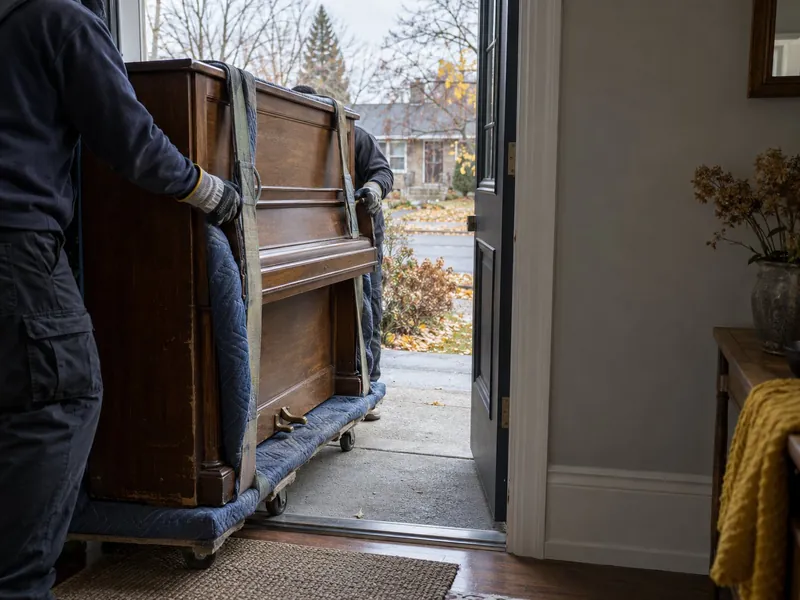
Retirement residences and condo buildings often ask for a certificate of insurance. Ask the building for its wording. The certificate shows cover exists; the limit on your goods is in your contract. Pianos: piano moving.
Who carries the cover
Ottawa Moving Desk forwards requests and offers no cover of its own. The mover that calls sets its price and its valuation terms, so put the questions above to that company. Send the move with the form on this page.
Questions to ask the company
- Who is your insurance provider, and what is the policy number?
- What is the most you pay for a damaged or lost item, written as a dollar figure and how it is calculated?
- Does the cover include boxes I packed myself, and boxes your crew packed?
- If my belongings stay on the truck overnight, is it kept in a secure facility?
- Will you subcontract any part of the move, and who insures the subcontractor?
Have this ready for the call
- A written inventory of the home, with photos of the high-value pieces and serial numbers of electronics
- Your home or tenant policy number and the phone number of your insurer or broker
- A list of items worth more than the typical limit: art, instruments, jewellery, collectibles
- Receipts or valuations for those items
- The long-distance route and dates, so the insurer can name the transit period
Questions people ask
What is valuation in a moving contract?
Valuation sets the most a mover pays if your goods are lost or damaged in its care. The limit is written into the contract, so a low figure can sit far below what your belongings are worth. Ontario’s tip sheet tells you to ask about limits on compensation before signing.
Does my home insurance cover a long-distance move?
Many do. A 2017 insurance-industry release says most home insurers let you transfer a policy and cover belongings in transit, while some providers do not. Ask your insurer in writing whether it covers the truck, a storage stop and the whole route.
Do I need a separate moving insurance policy?
It depends on the answers from your mover and your insurer. The Canadian Consumer Handbook suggests that if home insurance does not cover the move, replacement value coverage is the safer choice, and that you should learn the limitations of any cover the mover offers. Valuables are the usual reason to add one.
What if the mover's cover is lower than my goods are worth?
You have three routes: raise the mover’s limit if the company sells a higher level, add a separate transit policy, or carry the high-value items yourself. Ontario’s page advises moving valuables such as jewellery and artwork and personal documents on your own.
How do I report damage on delivery day?
Make a note of missing or damaged items before the movers leave, as the Ontario page advises, and photograph them. The Canadian Consumer Handbook adds: keep an inventory, supervise unloading and file a claim quickly. Send the claim in writing to the company named in your contract.
Which checks does Ontario suggest before hiring a mover?
Ontario’s page says the province does not license them. It suggests checking the Consumer Beware List and Better Business Bureau alerts, and the tip sheet suggests checking whether the mover follows the Canadian Association of Movers’ Good Practice Guidelines.